Red Rice Poha vs White Poha: Glycemic Index, Fiber & Nutrition Breakdown for Diabetics
Is Red Rice Poha genuinely healthier than traditional white flattened rice? We dive into anthocyanin antioxidants, iron density, and low-GI insulin control.

Dr. Ananya Sharma
Senior Clinical Nutritionist & Food Biochemist
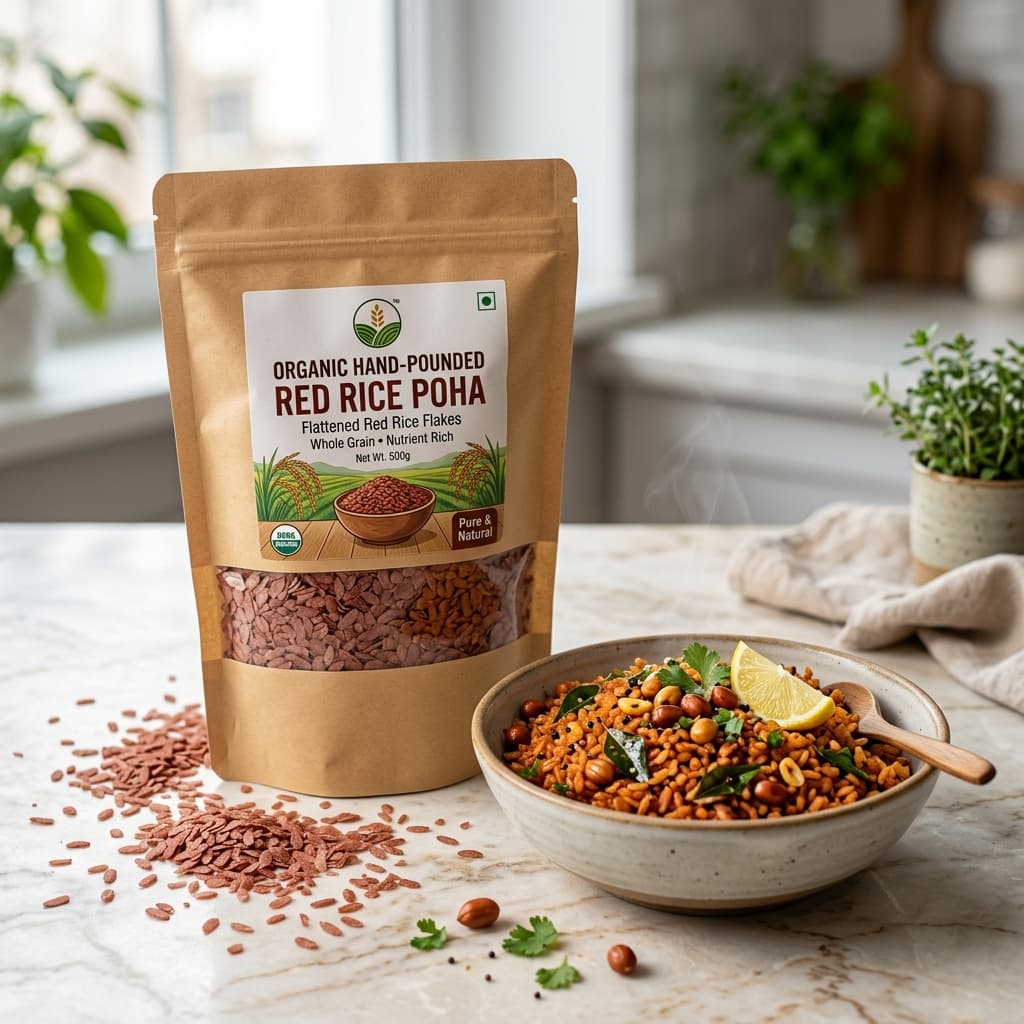
# Unveiling the Power of Hand-Pounded Red Paddy Flakes
Poha (flattened rice) has been an integral staple of Indian breakfasts for generations. However, modern artisanal milling has revitalized Organic Hand-Pounded Red Rice Poha, made from unpolished indigenous red rice varieties with the bran and germ layers intact.
# What Makes Red Rice Poha Unique?
- Rich in Anthocyanin Antioxidants: The deep ruby red hue comes from natural anthocyanins, the same heart-protecting antioxidants found in blueberries.
- 3x Higher Iron Content: Hand-pounding retains the mineral-dense outer husk, making it an excellent dietary ally against anemia.
- Slow Digesting Low-GI Carbs: High soluble fiber slows carbohydrate breakdown, preventing post-prandial blood sugar spikes.
# Head-to-Head Comparison: Red vs White Poha
| Parameter | Red Rice Poha | Standard White Poha |
|---|---|---|
| Bran Retention | 100% Whole Grain | Stripped During Polishing |
| Dietary Fiber | 4.8 g / 100g | 1.2 g / 100g |
| Iron Density | High (5.5 mg) | Moderate (1.8 mg) |
| Glycemic Index | Low (approx. 50) | High (approx. 70) |
Mentioned In This Article
₹1 Live Payment Test Product
Sample product for testing Razorpay live payment gateway. Price: ₹1.
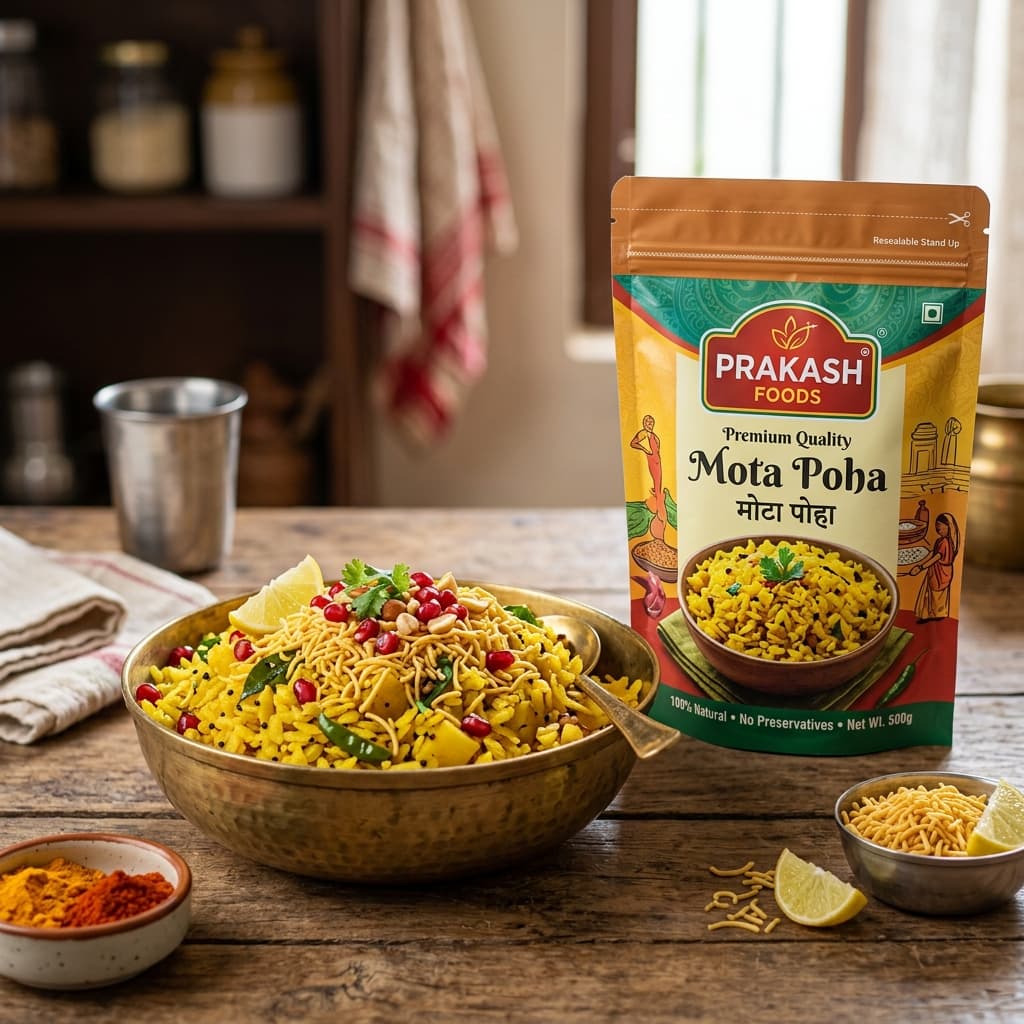
Instant Masala Poha Breakfast Cup (Ready in 3 Minutes with Boiling Water)
Freeze-dried artisanal poha with real vegetables, crunchy peanuts, and authentic tempered spices. Just add boiling water and enjoy anywhere on the go.
Common Questions About This Topic
Answers from our team of nutritionists and food scientists
Yes, makhana is excellent for weight management. At only 347 kcal per 100g with 9.7g protein, 14.5g dietary fibre, and a very low glycaemic index, makhana keeps you full longer, reduces cravings, and prevents blood sugar spikes. It is a scientifically validated low-calorie, high-satiety superfood.
Yes. Makhana has a low glycaemic index (GI ~50) which means it causes a slow, steady rise in blood sugar compared to other snacks. Its high magnesium content also supports insulin sensitivity. Most nutritionists recommend 20–30g of roasted makhana as an ideal mid-meal snack for Type 2 diabetics.
Makhana is best consumed as a mid-morning or evening snack (10:30 AM or 4–5 PM). Eating it 30–60 minutes before meals can help control portion size. For athletes, consuming makhana post-workout provides a light protein boost without excess fat. Avoid eating large quantities right before bedtime.
forumBe the First to Comment
💬 Join the conversation — share your experience or ask a nutrition question. Comments are moderated before appearing.
editLeave a Comment